Where it Started: A Conversation with Jean Carroll
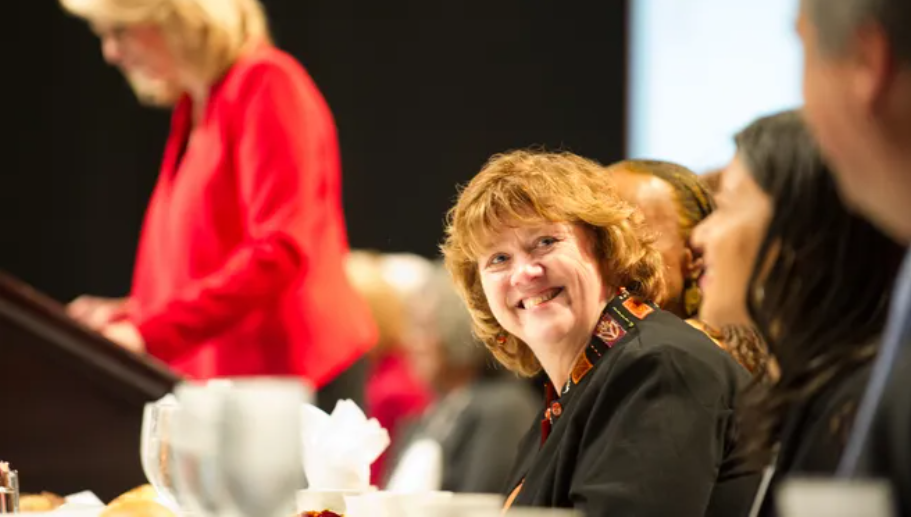
Jean Carroll at the 2014 luncheon head table
This October, the Empowering Women Luncheon marked its twentieth year. Before there was a luncheon, there was a problem to solve, and Jean Carroll was the one solving it. In 2007, she and a committee of board members launched the first Empowering Women Luncheon, with Dr. Mae Jemison on the stage.
We sat down with Jean to ask how it began, who she still remembers, and what she hopes never changes. Listed below is a summary of our conversation:
How it began
Take us back nearly 20 years. What was happening at the YWCA when the idea for the luncheon first took shape?
Interestingly, it was not that different in some ways than it is today. Our government funding was shifting, and it was disappearing from some of our programs. So we did a whole year's worth of comprehensive study to figure out which programs we were going to keep and which ones we would have to let go.
Those that were financially stable could stay. For those that weren't, we worked with other agencies to move those programs to a different organization, so they didn't get lost. We just were no longer the lead on them.
One thing that came out of that for sure was that we had to find a way to supplement that government funding with our own money. That was part of the impetus behind starting an event-based fundraiser.
Why build that event around women?
The need was financial. The focus on women was really just what we did. We are an organization of women helping women, and the idea that we could pull together women from the community to support other women who were struggling just made a whole lot of sense to us. That's the core of our mission.
There wasn't really an event like ours, specifically focused on women coming together for a purpose other than networking. This was more than networking. This was really about doing something good for your community.
The YWCA's mission is eliminating racism and empowering women. How did that shape the luncheon from the beginning?
In 2006, the YWCA was kind of considered the women's YMCA by many people. We had health and fitness programs, and people thought of us as just health and fitness, even though we were doing this incredible work with housing and with women in crisis.
The year before the luncheon is when we started using "eliminating racism, empowering women" as our brand. Those words show up on every piece of literature, on all of our logos, on our building. It was important to us that the community understood we didn't have just one purpose. We were focused on women, but especially women of color, in eliminating racism. And that was a little controversial at the time, honestly.
So it was important to us for that first event to have a successful woman of color as our speaker. That was Mae Jemison, the NASA astronaut.
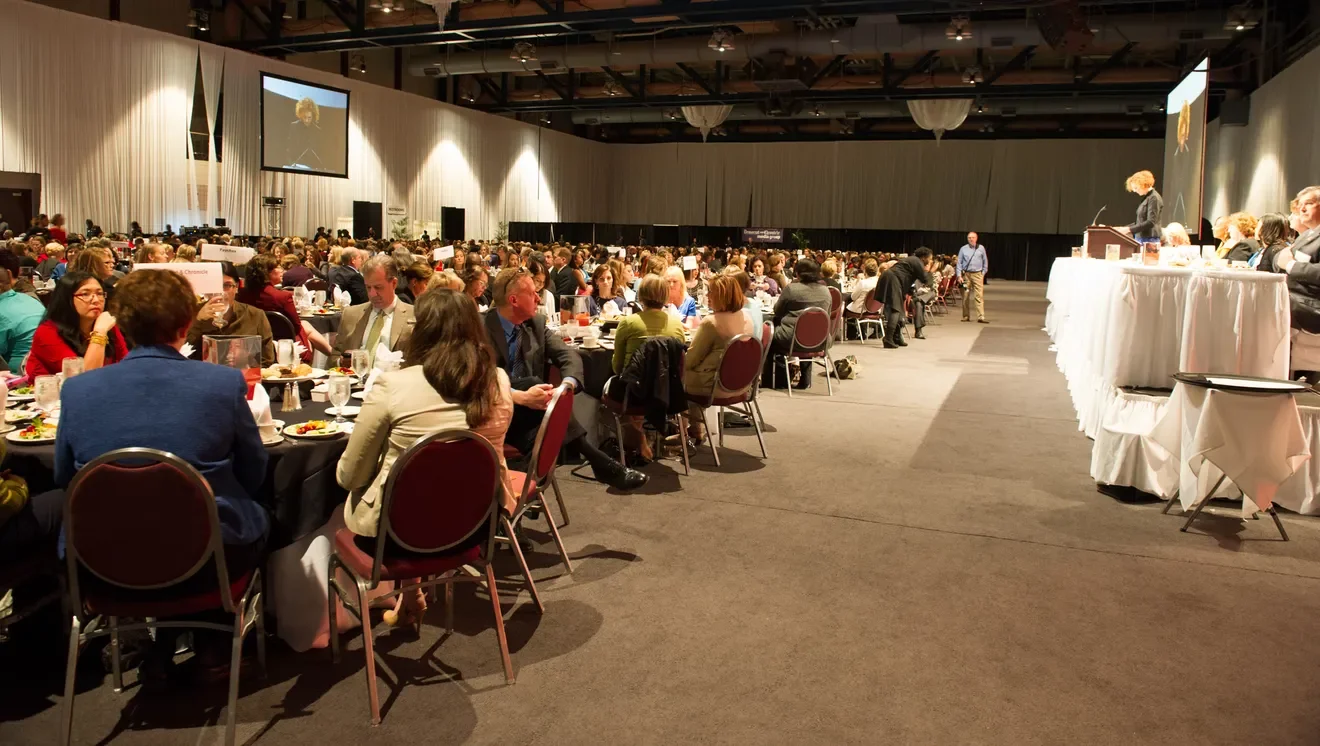
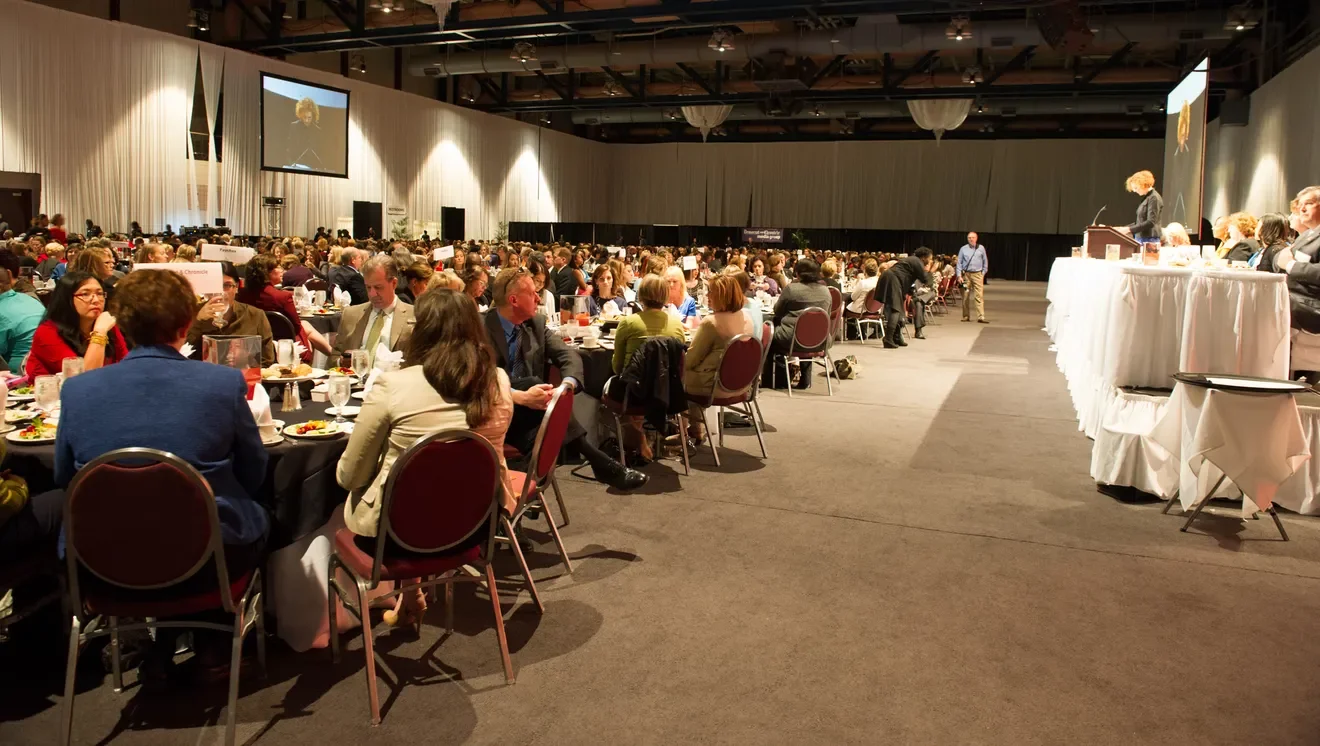
The first room
How did you decide whose voice belonged on that stage?
Primarily, we looked for women who struggled against pretty overwhelming odds. And these women also were willing to share their stories and their vulnerability. It's hard to fess up to being anxious and unsure, and to how you were able to get over that hump.
So we were looking for that in a main speaker. And then we were looking for folks from the YWCA who could get up and tell their stories, which is not an easy thing to do in front of a thousand people.
Take us into the room at that first luncheon. What do you remember most clearly?
I remember being nervous and wanting it to really go smoothly. I walked in there and felt like I was going to my first day of school. What's going to happen? Are people going to show up?
But then it was transformed into a great joy, seeing so many people from the community, some of whom I knew and some of whom I had never met, coming in and being supportive of our work. We had Mae Jemison as our lead speaker. And having some of the women served by the YWCA get up and tell their stories was just very impactful. There were tissue boxes on the tables.
How did Rochester respond?
I think it really opened the eyes of many people in our community. We can be a very segregated community in many ways. What happens in the suburbs and what happens in the city are often two different worlds. So having everybody hear what is happening to women who are struggling, and hear their stories firsthand, I think it really opened a lot of eyes.
Did the luncheon become what you imagined?
I didn't anticipate the broad enthusiasm. The word spread really pretty quickly. We started out the first year with 600 attendees, and by the fifth year we were probably close to a thousand. It was fast, and it was wonderful, and it was exciting.
The women she remembers
Is there a woman from those early years you can still picture clearly today?
Oh, yes. A young woman who came to Rochester from Detroit, trying to escape the influences around her that kept her addicted. They say you have to change people, places, and things if you really want to beat an addiction.
When she arrived, she was homeless, and she was alone. She was lucky to find a spot at a women's recovery house. After that program, she came to the supportive living program here at the YWCA. We had 29 apartments for women who were recovering from addiction.
What she said is that the YWCA gave her a home. We gave her a caring community. She understood that she needed to do the work, but having that support around her made a huge difference. She took control of her life. She took control of her addiction. And she decided to go back to school.
She got her associate degree at Monroe Community College. Then she decided that wasn't quite enough, and she earned a bachelor's in social work. Now she is a social worker, helping other people with her degree and her lived experience. You can have a degree but not have lived it. It makes a huge difference when the person really understands what's going on with the person they're trying to assist.
I was so proud of her. And this is beyond her. This is the impact of the YWCA out there in the community.
Was there a moment that showed you the luncheon's impact reached beyond the room?
I remember one of our mission moment speakers– a staff member. She had the most beautiful smile you can imagine. She was one of our case managers, and she worked in the schools, in a program we had for teenagers who were pregnant. The intent of the program was to keep them in school, and she was able to do that with so many young women.
She was able to have one of those young women come and speak at the luncheon. Imagine that you're 16 years old, you're a new mom, and you're standing in front of a thousand people telling your story. Our case worker brought out the best in everybody. She was always there whenever there were obstacles in that young woman's way. As CEO, I was very proud of her.
Why do you think women kept coming back, year after year?
I think we had the right combination. Often an event will have a name speaker, somebody you recognize. That's definitely an important part. But the part that nobody else really has is the women we serve, who are willing to share with us their vulnerability and their story of success. That combination is just magical.
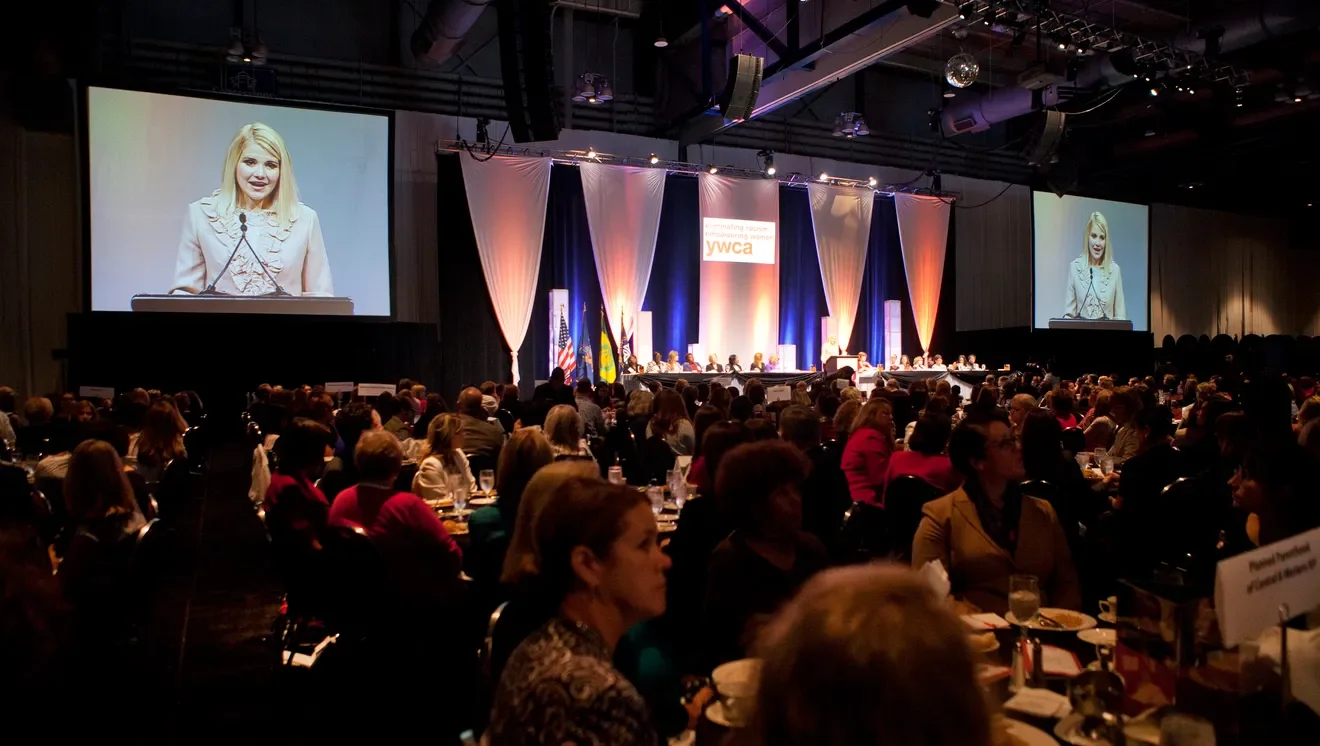
2014 luncheon with speaker Elizabeth Smart
Twenty years on
What has changed in the way Rochester recognizes women's voices and leadership?
I would say there are more women in leadership positions in our community, although it's still a little bit of baby steps. The focus on women's health has grown substantially, and things like trauma-informed care. Many women who came to us have experienced trauma of one sort or another. Understanding how trauma can make you stand still, and not be able to take the next step, is a critical element in a person's healing. All of the staff at the YWCA have been trained in trauma-informed care.
The other area is the social determinants of health. Twenty years ago, did you even hear that term? No. But essentially it says that if you're living in a poor neighborhood, where you can't even get your kids outside to play, it's going to affect you. You're going to be nervous every time they go outside. Our community is beginning to understand those dynamics. And understanding them moves you away from blaming that person for where they are.
Where is there still work to do?
Wow, there is so much work to do. I have always reflected on the YWCA's history. This organization started in 1883. Women didn't even have the right to vote then. It's amazing, the changes that have taken place since its founding.
These days, some of the gains we thought we had feel like they're slipping away. They didn't get there easily, and we're not going to be able to retain them easily. We are going to have to put our passion to work, in our voices, as advocates, and in our collective power as women. So don't get discouraged. Keep at it. We’ve got to fight for the long haul.
You helped start something that has lasted nearly two decades. What are you most proud of?
I am so proud of the people I have worked with: the volunteers, all the women who have served on the board of directors and on the Empowering Women Luncheon committee, and the staff. I love the staff at the YWCA. And the women who have come through our doors and made it. They've worked very, very hard. So I'm proudest of them, I would say.
Twenty years from now, what do you hope we'll be able to say the luncheon contributed to Rochester?
I think we can say that we will no longer be known as the women's Y. We will be known as the YWCA: eliminating racism, empowering women.
If you could speak to every woman who has attended, and every woman who will, what would you want her to know about why this gathering was created?
It was created to show the collective power of women working together.
The work Jean describes did not stop when we finished our luncheon with Venus Williams. It happens every day, in Emergency Housing, in supportive living, and in the case managers who keep showing up. To support it, visit ywcarochester.org/ways-to-give.
For more stories like this, and to learn more about the work we do at the YWCA, Sign up for our new newsletter “The YW” is launching November 4!